
The Opposition alleged that without any provocation from the Opposition, "outsiders who were not part of Parliament security were brought in to manhandle the Opposition leaders and members, including women Parliamentarians who were only protesting against the Government's conduct, highhandedness and muzzling of the voice".
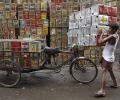
After consumer price index jumped the 6.3-per cent mark in May and wholesale inflation set a record of 12.94 per cent, house economists at Swiss brokerage UBS Securities have warned that the country is facing more upside risks on the inflation front that is set to averaging at 5 per cent for the year. Rising prices of edible oils and protein rich items pushed retail inflation to a six-month high of 6.3 per cent in May, breaching the comfort level of the Reserve Bank and thus rendering reduction in interest rates a difficult proposition in the near term. Led by petrol price, that has crossed the Rs 100-mark in many states, wholesale inflation too accelerated to a record 12.94 per cent in May. While crude oil has crossed $70 a barrel on account of rising prices of crude oil and manufactured goods due to spike in commodities, and the low base of last year due to the lockdown.

Although the Disaster Management Act for Covid containment measures, considered a hindrance in conducting the census, was withdrawn in March this year the Centre has not taken any further action on conducting the much-delayed population enumeration.
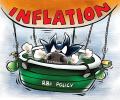
Reserve Bank on Wednesday said it expects retail inflation at 5.2 per cent in the first half of the current fiscal and revised downwards the target to 5 per cent for the quarter ended March. While headline inflation at 5 per cent in Feb 2021 remains within the tolerance band, some underline constituents are testing the upper tolerance level. Going forward, the food inflation trajectory will critically depend on the temporal and special progress of southwest monsoon in the 2021 season, RBI Governor Shaktikanta Das said on Wednesday while announcing the first monetary policy for the current fiscal. Reserve Bank of India (RBI) has kept the key repo rate unchanged at 4 per cent to support growth in the current situation.

The Reserve Bank of India on Tuesday kept key rates unchanged.
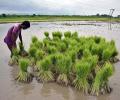
The area under paddy - the biggest foodgrain during the kharif season - was almost 13 per cent lower in the week ended August 5 as compared to the same period last year despite a slight pick-up in rains in the main growing regions, triggering fears of a 10-12 million-tonne drop in final output. Sources said with the peak sowing season for paddy almost coming to an end in the big-growing states, any uptick in coverage from here onwards may not give the desired yields. With 30 per cent of normal average area in which paddy is grown every year remaining unsown till early August, there is a limited chance of a big uptick in output, trade and market sources said.
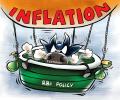
Inflation in food articles basket was 6.99 per cent In May, 2019, down from 7.37 per cent in April. However, onion prices spiked in May with inflation at 15.89 per cent, as against (-) 3.43 per cent in April.

If you are planning a vacation, choose from these most clicked on destinations.

Pakistan's Finance Minister Miftah Ismail on Monday said the government can consider importing vegetables and other edible items from India following the destruction of standing crops due to massive floods, three years after Islamabad downgraded trade ties with New Delhi over the Kashmir issue.

Warning that the new year will be riskier than the previous two in terms of growth, inflation and the perils of monetary policy normalisation on consumption demand in particular, along with other external risks, a Wall Street brokerage has pencilled in an 8.2 per cent GDP growth next fiscal, with more downside risks to the projection. The biggest risk to the projection is a derailed consumption demand that has been the main growth driver in the past many years, said the Bank of America Securities India house economists who still believe that consumption demand will remain the key driver of growth next fiscal as well.

This year saw no improvement in bilateral ties as India accused Pakistan of cross-border infiltration and re-activation of terror-launching pads near the LoC.

'Aquaponics can effectively cushion the impact of a calamity like COVID.'
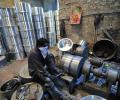
With the Covid-19 pandemic showing signs of ebbing and economic activity picking up, factory owners in Jalandhar had hoped that the worst was over. However, the heat wave in April and extensive power cuts that came with it, have crushed their hopes. The city's large number of micro, medium and small enterprises (MSMEs) are now gearing up for yet another struggle, this time to survive with the shortage of power that is severely impacting their operations.

The RBI has set up a panel to review ATM charges, and fees levied by banks.

The pink beauties have arrived in Mumbai for their annual visit.
On food inflation, RBI said it is likely to soften from the high levels registered in December and the decline is expected to become more pronounced during the fourth quarter of this fiscal as onion prices ease following arrivals of late kharif and rabi harvests.

Skymet is credited with correctly predicting the 2009 drought.

Pinaki Panda shares his experience. You can share yours too.

Made by hand, these steamed modaks are filled with jaggery and coconut.

Big-ticket investments taking off is crucial for Kerala given the years it lost to labour militancy courtesy the same political forces currently in power, explains Shyam G Menon.

Maharashtra Chief Minister Uddhav Thackeray announced a statewide curfew for 15 days from 8 am on April 14 to contain the rapid spread of the coronavirus in its second wave. With Section 144 being imposed across the state, Thackeray essential services have been exempted from the restrictions. The curfew will be in place till 7 am on May 1.

Spiralling prices pinched the pocket of consumer as edible oil, fuel and many other commodities turned dearer this year amid pandemic-induced disruptions but the inflationary pressure is anticipated to ease, though marginally, in the coming months. As consumers, at retail as well as wholesale levels, are willy-nilly learning to live with the new normal of curbs to contain the spread of coronavirus infections, experts are of the view that elevated inflation is likely to stay longer. After dealing with the devastating blows from the second COVID wave, especially during the April-June period, the economy is well on the revival path but the emergence of Omicron might unsettle the recovery trajectory in the short term.

Maharashtra Chief Minister Uddhav Thackeray on Sunday night announced a statewide curfew in Maharashtra for 15 days from April 14. However, he clarified, essential services were exempt from the curbs.

Flood victims have been fighting for survival and living in temporary shelters nearby railway tracks with lack of food items. They are yet to get any help from the government, reports M I Khan.

The inflation in the food basket spiked to 7.89 per cent in October 2019 as against 5.11 per cent the preceding month.
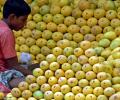
In April, RBI had projected retail inflation to be around 5 per cent.
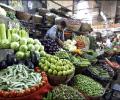
Inflation, as measured on the Wholesale Price Index (WPI), has been in the negative zone since November 2014.

As it bets on a good monsoon for food prices to ease, the government on Tuesday said the Reserve Bank will consider appropriate policy actions to tighten money supply to bring down inflation.

FMCG CEOs indicate that the market should stabilise post the general elections and that some growth should make its way back especially in rural areas

India's current account deficit is expected to deteriorate in the current fiscal on account of costlier imports and tepid merchandise exports, according to the Finance Ministry's monthly economic review. The review released on Thursday by the ministry also said that global headwinds would continue to pose a downside risk to growth as crude oil and edibles, which have driven inflation in India, remain major imported components in the consumption basket. For the present, it said, "their global prices have softened, as fears of recession have dampened prices somewhat. This would weaken inflationary pressures in India and rein in inflation."

Pushed by rising prices of essential kitchen items, the retail inflation rose to an eight-month high of 7.34 per cent in September, making the RBI's task to push growth by reducing the interest rate even more difficult in coming the days. The Consumer Price Index (CPI)-based inflation was 6.69 per cent in August and 3.99 per cent in September 2019. Inflation has been hovering above 4 per cent since October 2019.

For the current woes of the state to end, in city after city, town after town, village after village, unauthorised constructions have to be removed, no questions asked, says N Sathiya Moorthy.

Senior Congress leader and Leader of Opposition in Rajya Sabha Ghulam Nabi Azad made this assertion outside Parliament while speaking to reporters and said the revocation of suspension of the Opposition Rajya Sabha MPs was not a demand, but a 'request'.

The agriculture sector has witnessed feeble growth on account of drought for two successive years

The release of water has affected over 1.50 lakh people and damaged 171 houses, he said, adding National Disaster Response Force personnel have been deployed in the area to rescue people.
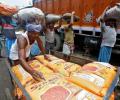
Progress on monsoons along with favourable base effect in 2HFY2017 continues to point towards RBI achieving its near 5 per cent inflation target by the year-end
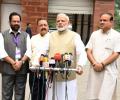
PM Narendra Modi hopes the successful "rains" of GST will fill the Monsoon session with pleasant smell like that emanating from dry soil after showers.
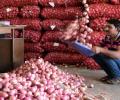
Vegetable inflation softened to 24.76 per cent in June, down from 33.15 per cent in the previous month. Inflation in potato was (-) 24.27 per cent, against (-) 23.36 per cent in May.

The summer and rainy weather is favourable for locusts and they move from one place to another during this time, travelling 150 km in a day.

Kavitha Kuruganti has been fighting for decades to ensure farmers are respected and get their due from the Indian nation. In order to ensure they don't struggle for a living, she works to ensure sustainable farm livelihoods and farmers' rights.
